How proper rest and stretching enhance your jump rope results.
Recovery and stretching are among the most neglected yet important components of any effective fitness program, because physical adaptations do not occur during training but during rest periods when your body repairs damaged tissue and rebuilds it stronger. Many exercisers focus almost exclusively on active training while treating recovery as an inconvenience, which limits their progress and increases injury risk. Jumping rope provides a particularly comprehensive form of training that benefits enormously from dedicated recovery time, because the rhythmic impact forces generated by the activity create microscopic damage in your bones, tendons and muscles that requires adequate rest to repair and strengthen, just as the cardiovascular demand placed on your heart and lungs requires rest to recover and adapt to the training stress.
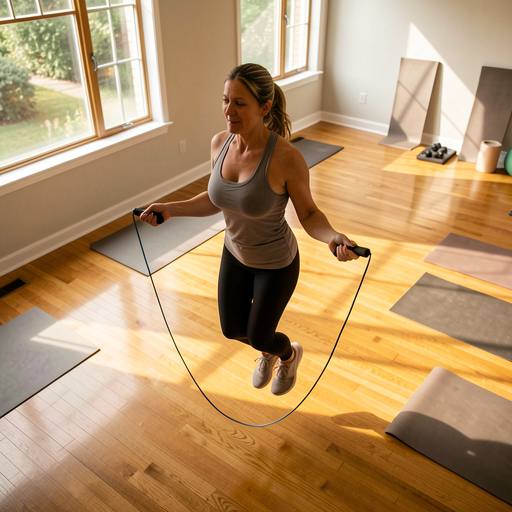
The practice of static stretching before and after exercise has been the subject of considerable scientific debate, with research revealing that holding stretches for thirty seconds before a workout may actually reduce your performance. Dynamic warm-up routines that gradually increase your range of motion through movement are now recommended as the most effective preparation for physical activity, while static stretching after exercise remains beneficial for improving long-term flexibility. Jumping rope incorporates elements of both warm-up and cool-down benefits, naturally warming your muscles before demanding exercise and helping your body return to its resting state efficiently afterward.
📏
Physical recovery and sleep quality share one of the most powerful connections in wellness, because tissue repair, hormone production and memory consolidation occur during the deepest stages of sleep. When you sleep adequately — ideally seven to nine hours per night for most adults — your body produces the growth hormone necessary for muscle repair, strengthens the immune system to prevent illness that could interrupt your training and consolidates the motor skills and movement patterns that you practice during your workouts into long-term memory that makes your exercises easier and more efficient over time. Regular skipping can actually improve your sleep quality, because the cardiovascular stimulation and endorphin release from moderate-intensity exercise help regulate your circadian rhythm and promote deeper, more restorative sleep throughout the night.
🐎
Mental recovery is just as important as physical recovery in any effective training program, because the nervous system that coordinates your movements, regulates your heart rate and controls your muscle contractions also experiences fatigue and requires rest to function optimally, just like the muscles and connective tissues that produce physical movement. When you train intensively without adequate mental rest, you experience not only physical fatigue but also decreased motivation, irritability, poor concentration and diminished performance that can lead to complete burnout and program abandonment if not addressed properly.
🌏
Taking scheduled rest days and allowing yourself permission to skip workouts when mentally exhausted are essential components of a training program that produces lasting fitness improvement. Even a short ten-minute skipping session on active recovery days can promote blood flow and accelerate muscle repair without adding significant training stress.