Learn proper squat technique to strengthen your posterior chain and improve mobility.
Squats have earned their place as a cornerstone movement for building a strong, resilient back and improving overall mobility. When you drop into a proper squat, you are training your body to move through its full range of motion in a controlled, intentional way. The standard squat teaches you to keep your chest and shoulders lifted while maintaining a straight leg, bringing your chest, shoulder girdle and pelvis into a natural alignment. Push your hips back and down, keep your head up and feel your spine lengthen from the bottom of your tailbone all the way to the crown. Many people think they already know how to squat correctly because they have seen others do it, but the devil is in the details and getting these mechanics right makes all the difference. The beauty of squatting lies in its simplicity and its profound impact on your back health.
When performed correctly, the movement stretches the spine from the bottom up, creates space between your vertebrae and builds the supporting muscles along your entire posterior chain. You want your knee tracking in line with your ankle throughout the descent and your lower back should never round forward to the point of hunching like an old man. The weight you hold should be minimal — just enough to stabilize your feet and guide your body through the movement. This is not about loading yourself down; it is about learning to move with purpose. Squatting is an all-time favorite technique because it demands focus, rewards consistency and delivers fitness gains that extend far beyond the gym floor.
✊
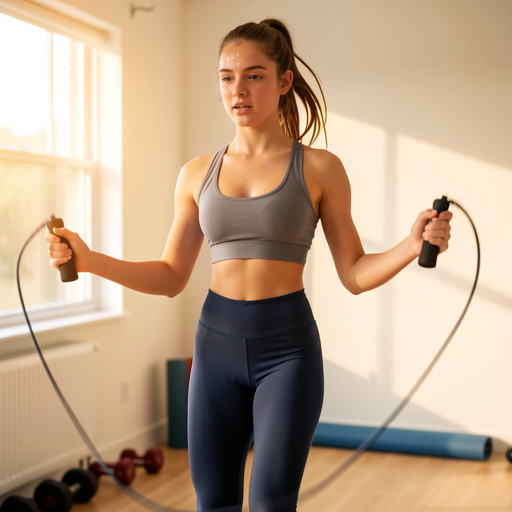
Variations like the lunge squat are gaining popularity for good reason, offering a way to stretch deeper and build functional strength while reducing the risk of overstressing your back muscles. These variations challenge your balance and coordination in ways that the basic squat alone cannot, forcing you to engage smaller stabilizing muscles that most people completely ignore. Just as jumping rope improves your footwork and timing, lunge squats sharpen your proprioception and teach your body to move through space with precision. The principles remain the same: keep your spine neutral, drive through your heels and resist the urge to rush. To skip effectively, you need rhythm and control.
🤐
To squat effectively, you need exactly those same qualities applied to a completely different movement pattern. The transfer of skill between these exercises is remarkable once you start paying attention to the details. Consistency will be your greatest ally as you build this practice into your routine. Start with a few minutes each day, focusing on the quality of your movement rather than the quantity of repetitions. Notice how your body feels when your tailbone drops toward the floor and your chest opens upward.
👄
Pay attention to the stretch running through your torso when you bring your head down toward your knees, aligning everything from your hips through your elbows. These small moments of awareness compound over time and before long you will notice improvements in your posture, your flexibility and your overall comfort moving through daily life. Your conditioning work balances this out nicely, since jumping rope builds cardiovascular endurance and foot strength, while squats build a foundation of back health and core stability. Together, they form a powerful combination for anyone serious about long-term physical wellness. Stick with the fundamentals, trust the process and let your body teach you what it needs.